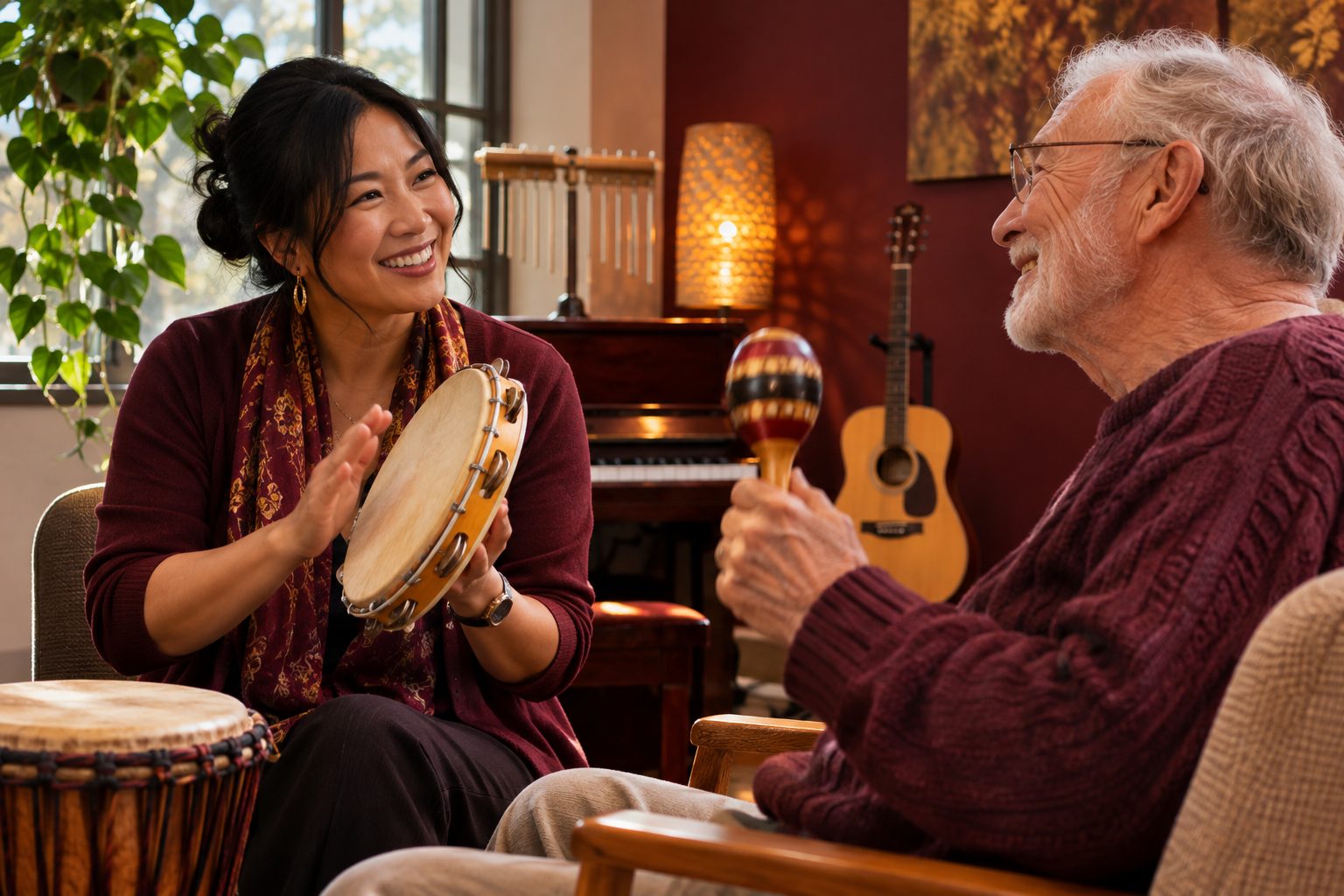
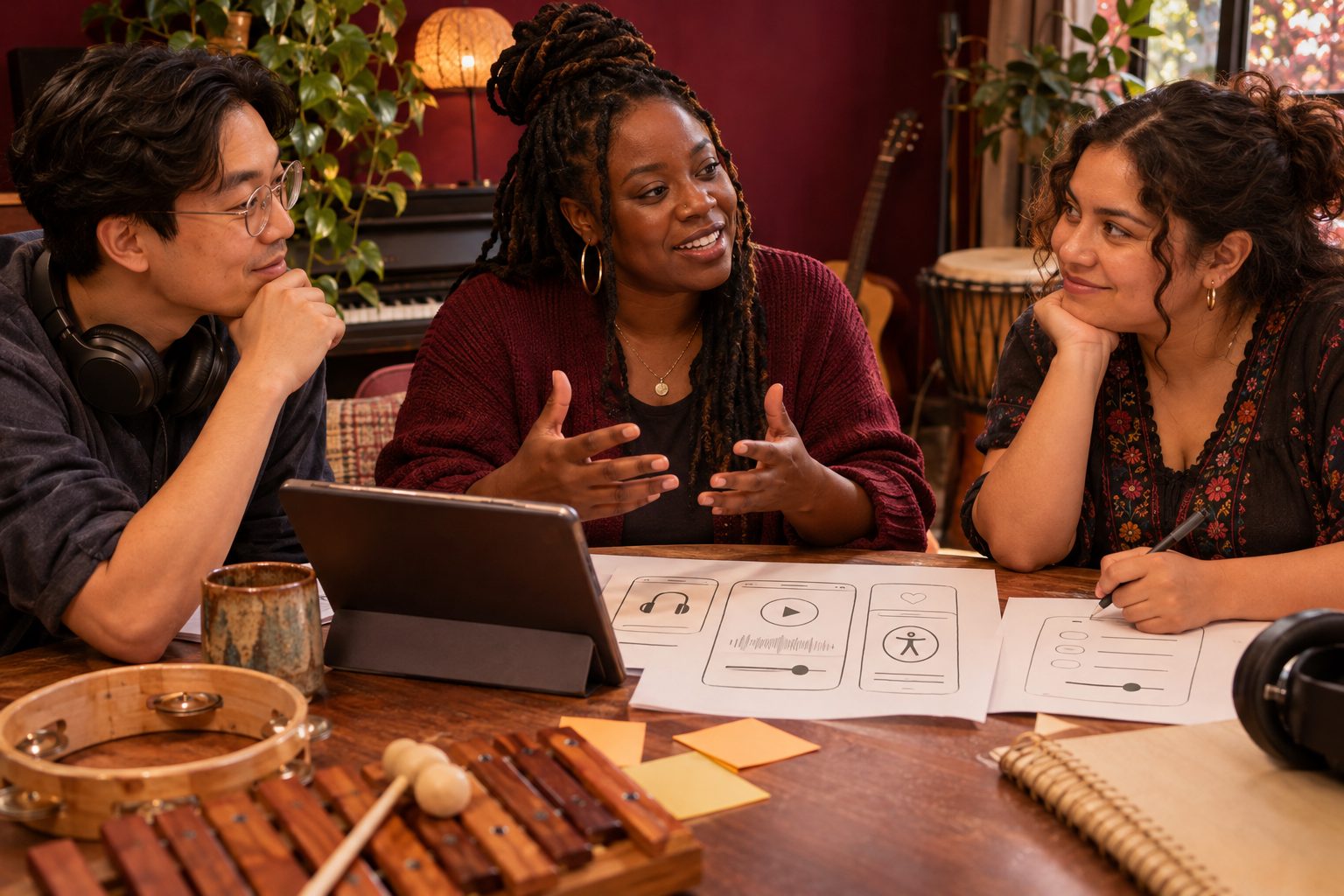
A guitar, a voice, a rhythm: the encounter is personal. The evidence must be precise. This alternative visual language gives music and people a stronger stage while keeping clinical claims grounded in study design, outcome, and applicability.
An intimate melodyListening begins with people.A guitar can invite attention and connection. How music is used, and what it achieves, depends on the setting and the evidence.
Music is deeply human. Its therapeutic claims deserve deeply careful evidence.
02 / Explore the practice
Six areas of expertise
Each area has a different kind of evidence. Clinical treatment, structured listening, and general wellness music require different claims and safeguards.
01 / WELL-BEING
Mental and emotional well-being
Depression, anxiety, grief, emotional regulation, relaxation, and sleep. Clinical depression findings concern therapist-led care added to usual treatment; sleep findings often concern recorded listening.
Rhythm can supply timing cues for movement. Music also engages attention, memory, and emotional processing, but a brain response alone does not prove clinical benefit.
Qualified therapists use individualized musical interaction toward defined goals in rehabilitation, mental health, oncology, dementia care, and other settings. Outcomes vary by condition and measure.
Tempo, rhythm, musical preference, cultural familiarity, and listening context can guide music designed for a specific experience. A composition becomes a clinical intervention only when its use and outcomes are properly evaluated.
Adaptive composition and preference-based playlists are research opportunities. To establish benefit, compare them with ordinary preference-matched listening on predefined outcomes and monitor adverse responses.
Develop listening experiences, services, or digital products with clear claims, accessible design, and appropriate clinical oversight. Match every benefit statement to the population and intervention actually studied.
Terminology matters. Music therapy is a professional, goal-directed practice. Music medicine commonly uses prerecorded music in healthcare. Wellness listening can support an experience without constituting clinical treatment.
Illustrations are conceptual and do not depict study participants or documented clinical outcomes.
03 / Research, made navigable
The evidence atlas
A curated first-pass extraction of the studies discussed in this project. “Not extracted” means a comparable numerical estimate still needs verification from the full text. Individual-trial bias notes are screening flags, not formal RoB 2 ratings.
Study and design
Population / sample
Intervention → comparator
Outcomes and effect estimate
Bias / applicability
Reviews can include trials shown separately here. Their participant totals must not be added together. Estimates apply to specified outcomes and comparators.
04 / Read the sources
Foundational publications and frameworks
Primary studies, evidence syntheses, and professional research agendas serve different purposes. Follow each link to inspect methods and full results.
A positive result in one population or on one scale does not establish a universal therapeutic effect.
Check the comparatorUsual care, an audiobook, verbal therapy, and another music activity test different questions.
Check the outcomeImmediate mood, clinical symptoms, gait speed, quality of life, and relapse are different endpoints.
Check certainty and follow-upSmall samples, subjective outcomes, high bias, and short follow-up limit what findings can support.
06 / Where inquiry goes next
Build the next chapter with care.
This atlas is a starting point. The next research layer will extract design, sample, intervention, comparator, outcomes, effect estimates, risk of bias, and applicability in a consistent format for every study.